BISO-ARM100: Automated Medication Sorting via Imitation Learning
A pilot study conducted at IETSI-EsSalud evaluating a low-cost bimanual robotic system (12 DOF) based on the open-source SO-ARM100 project. The system was trained via Imitation Learning and tested on a sample of 10 medication box types, achieving an 80% global success rate in a controlled environment.
Technologies
Overview
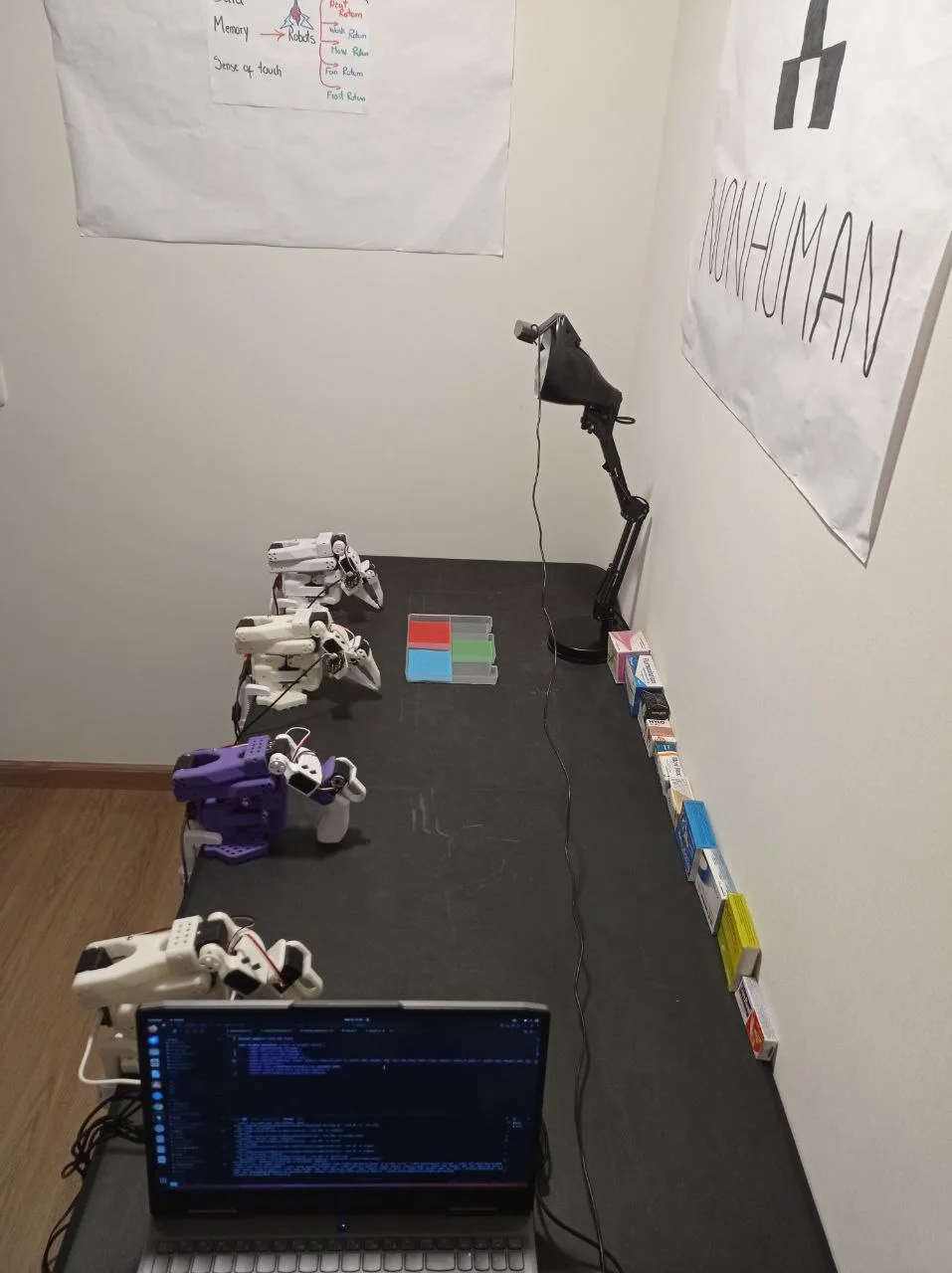
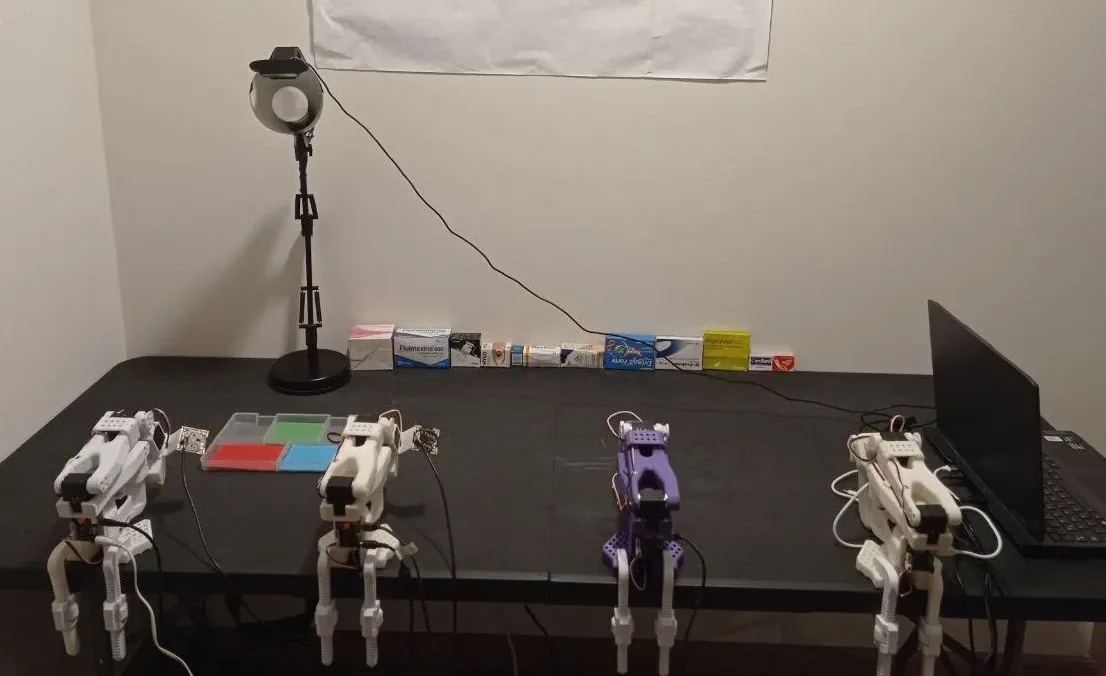
This pilot study evaluates the BISO-ARM100, a bimanual system derived from the open-source [SO-ARM100](https://github.com/TheRobotStudio/SO-ARM100) architecture, applied to automated medication sorting. Conducted by the Institute for Health Technology Assessment and Research (IETSI) at EsSalud, the project investigates if accessible hardware can mitigate medication errors in hospital pharmacies.
The system was trained using the ACT model via the LeRobot library. To maintain a realistic scope for this pilot, the experimental validation focused on a specific sample of 10 distinct box geometries (representing common pharmaceutical sizes). Each box type underwent 5 independent autonomous cycles, totaling 50 inference episodes to measure success rates and positioning errors.
Key Features
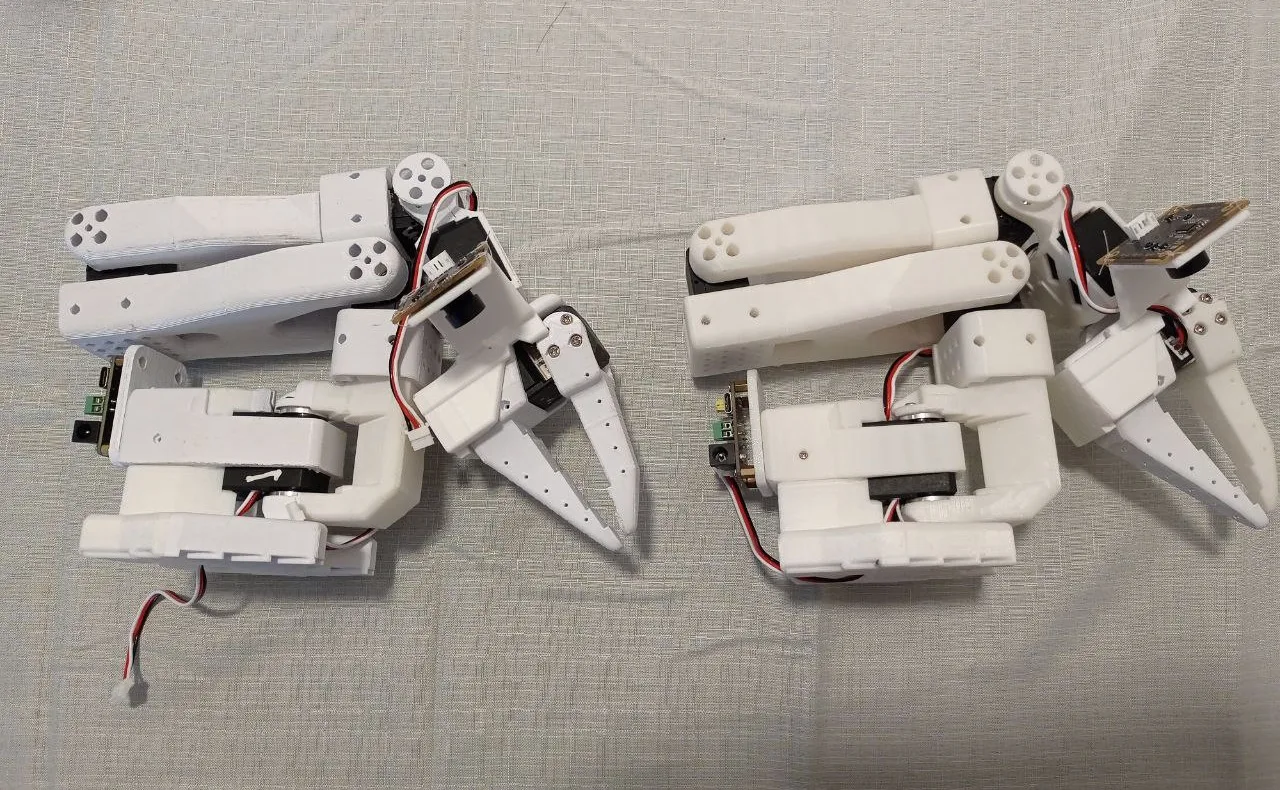
- Open-Source Hardware: Bimanual 12-DOF system built on the [SO-ARM100](https://github.com/TheRobotStudio/SO-ARM100) design.
- Training Data: 100 human-teleoperated demonstrations collected via wrist and overhead cameras.
- Study Sample: Tested on 10 specific box types (C1–C10) with 5 repetitions each (n=50 total trials).
- Performance: 80% global success rate (IC95%: 68.9% – 91.1%).
- Limitations: High accuracy (100%) on narrow boxes, but performance dropped to 40-60% on wider boxes near the gripper's limit.
- Precision: Median radial positioning error of 10.8 mm.
- Dataset: Inference and training data publicly available on Hugging Face.
Team
Mitshell Ramos Quispe, Brik Meza Pinedo, Bryan Bastidas Reyes, Luis Loayza Arroyo, Claudia Sedano Porras, Institutions: IETSI - EsSalud, NONHUMAN
Reflection
The study validates the technical feasibility of using Imitation Learning with low-cost open-source hardware for pharmacy tasks. While the 80% success rate is promising, the detailed analysis of the sample reveals that the system's reliability is strictly dependent on object geometry—performing perfectly with standard narrow boxes but degrading with wider formats. Future iterations requires a more diverse demonstration dataset to handle the edge cases identified in this sample.